
Meeting/Event Information

Neurofeedback Bootcamp: What You Need to Know for Effective Assessment and Intervention
 

December 06, 2022
1:00 PM - 3:00 PM
Add to Calendar


Zoom

Neurofeedback Bootcamp: What You Need to Know for Effective Assessment and Intervention
CE Credits: 4 credits  
 
DATE/TIME - December 6 AND 7
1-3 pm (Eastern)
12-2 pm (Central)
11 am - 1 pm (Mountain)
10 am - 12 pm (Pacific)
 
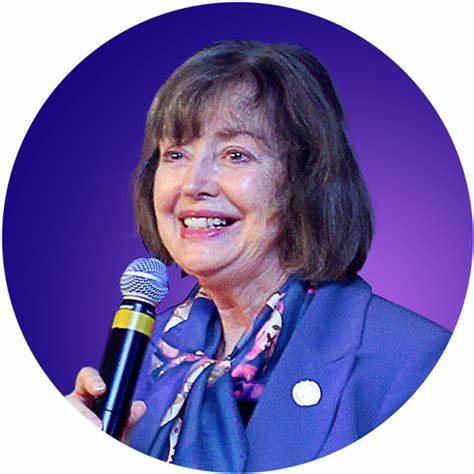
Presenter: Lynda Thompson, Ph.D., C. Psych., BCN
ADD Centre & Biofeedback Institute of Toronto
The essence of this workshop concerns how carefully done EEG assessment leads to interventions that improve clients’ functioning, whether they are clients with disorders or athletes and executives who wish to optimize their functioning. It teaches the basics, using lots of clinical examples, for those new to the field. It provides a great review and update for experienced practitioners.
In two days, we will cover what you need to know for effective neurofeedback practice. Participants will also learn how to combine neurofeedback with biofeedback, especially heart rate variability training, to synergistically improve self-regulation skills. For those interested in BCIA certification, the course covers Rubrics I, VI, VII, and IX of the Blueprint.
In the first day, participants with cover Orientation to Neurofeedback and Client Assessment. This includes basic knowledge about brainwaves (frequency, morphology, amplitude, magnitude, power, location, reactivity and origin); recognizing artifacts, how to measure the EEG, viewing the EEG in the time domain and in the frequency domain. With respect to instrumentation, it covers impedance; high and low pass filters, notch filters, Ohm’s law, the differential amplifier, common mode rejection, Nyquist principle and aliasing. Attendees will become comfortable with the International 10-20 electrode placement sites and their relation to Brodmann Areas (BAs). Montages for EEG assessment, and for training, will focus on referential and sequential placements. There will be instruction concerning how electrodes are applied, impedance is checked, artifacts are identified and removed, and how the single channel EEG results can be displayed in one Hz bins (1 to 35 Hz). Key ratios, such as theta/beta power ratios and ratios for identifying “busy brain” (ruminations and/or anxiety) will be explained.
The second day will cover Developing Treatment Protocols and Current Trends in Neurofeedback. Treatment interventions will include symptom pictures, EEG findings, and discussion of how to develop an individualized training protocol for each client. Together we will cover the basic patterns observed in the EEG and how those patterns correlate with symptoms. Patterns found in ADHD will be emphasized because it is the most common disorder and one for which neurofeedback has established efficacy. There will also be discussion of other patterns, such as low amplitude/fast pattern that may be found with alcoholism, anxiety, ruminations, compulsive behaviors; frontal alpha asymmetry in some patients with depression; patterns seen in Asperger’s/Autism Spectrum Disorder, patterns in seizure disorders; and findings in post-concussion syndrome. There will be mention of 19-channel EEG assessment, brain maps, LORETA source localization, and Event Related Potentials (ERPs).
Current Trends will focus on how neurofeedback can be part of multi-modal interventions. There will be explanations of how neurofeedback and biofeedback can be combined. This produces the most effective training to improve self-regulation skills and to treat common disorders, as well as to optimize performance.
Participants will be encouraged to ask questions and learn material relevant to their clinical practices. 
Learning Objectives
In this workshop you will :
  • Become familiar with the science underlying neurofeedback, including its scientific basis, learning theory, standard EEG bandwidths and associated mental states
  • Learn how to accurately measure brainwaves, with an emphasis on single channel assessment
  • Be competent in designing interventions for various disorders, including ADHD, Anxiety, Asperger’s syndrome/ASD, and also interventions for optimal performance in sport or professional careers
  • Become familiar with measuring other biofeedback variables and combining biofeedback (especially heart rate variability training) with neurofeedback

Delivery Method: Interactive webinar using telephone and Internet technology.  
Target Audience: Professionals who are interested in becoming certified in the field of neurofeedback.
Level:
INTRODUCTORY: Content is designed for psychologists who may have little to no background in a specialized skill or content area. Through this level of programming, the learner can become acquainted with the theoretical underpinnings, principles, methods, and perspectives of a content area. An introductory level program also may serve as the foundation for subsequent intermediate and advanced learning. Introductory level programming may also be related to an emerging area of knowledge or practice. Although this content can be used as a foundation for more advanced learning, an introductory level program may simply focus on breadth, enrichment or general knowledge. 
*The primary goal of this particular program is to broaden the clinical, consultative, and research knowledge bases of attendees and was deemed intermediate, by the definition above.
Prerequisites: None.
Delivery Method: Interactive workshop using telephone and Internet technology via Zoom with Chat feature.
For those psychologists using the modality of biofeedback and interested in the efficacy, science and latest clinical applications. This session presents research relevant to psychological practice, education and science; (2) it is our intention to host an offering to help psychologists to keep up with the most current scientific evidence regarding assessment, intervention, and education; and (3) we believe that this program would allow psychologists to increase competencies in order to improve services to patients.
This session IN NO WAY was a substitute for the basic academic education and training needed for entry to the field of psychology.
Disclosure:
There are no conflicts of interest to disclose other than being co-author of books that may be mentioned: THE A.D.D. BOOK,  SETTING UP FOR CLINICAL SUCCESS USING BIOGRAPH/INFINITI, THE NEUROFEEDBACK BOOK, & FUNCTIONAL NEUROANATOMY. 
 
CONTINUING EDUCATION STATEMENTS
Psychologists: The Association for Applied Psychophysiology and Biofeedback is approved by the American Psychological Association to sponsor continuing education for psychologists. The Association for Applied Psychophysiology and Biofeedback maintains responsibility for the program and its content.
There is no known commercial support for this program. This virtual workshop offers a MAXIMUM of 4 CE credits for maximum participation. BCIA Recertification: Hour-for-hour attendance may be used to fulfill the continuing education requirements for recertification with certificate of attendance.

IMPORTANT NOTICE: Those who attend this event in full and complete the appropriate evaluation form will receive CE ‎credits. Those arriving more than 15 minutes after the start time or leaving before a given activity is completed will not ‎receive CE credit.‎

Grievance Policy: AAPB is fully committed to conducting all activities in strict conformance with the American ‎Psychological Association's Ethical Principles of Psychologists. They will comply with all legal and ethical responsibilities ‎to be non-discriminatory in promotional activities, program content and in the treatment of program participants. If ‎participants have special needs, we will attempt to accommodate them. Trainings are held in locations accessible to ‎persons with disabilities. Accommodations will be made if requested. While AAPB works to assure fair treatment for all ‎participants and attempts to anticipate problems, there will be occasional issues which will require intervention and/or ‎action on the part of AAPB. This procedural description serves as a guideline for handling such grievances. When a ‎participant, either orally or in written format, files a grievance and expects action on the issue, the following actions will ‎be taken: 1. If the grievance concerns a speaker, the content presented by the speaker, or the style of presentation, the ‎individual filing the grievance will be asked to put his/her comments in written format. The CE Coordinator will then ‎pass on the comments to the speaker, assuring the confidentiality of the grieved individual. 2. If the grievance concerns a ‎workshop offering, its content, level of presentation, or the facilities in which the workshop was offered, the CE ‎Coordinator will mediate and will be the final arbitrator. If the participant requests action during a workshop or ‎conference, the CE Coordinator or his/her representative will: a. attempt to move the participant to another presentation ‎or; b. provide a credit for a subsequent presentation or; c. provide a partial or full refund of the registration fee. Actions ‎‎2b and 2c will require a written note, documenting the grievance, for record keeping purposes. The note need not be ‎signed by the grieved individual. 3. If the grievance concerns the business practices of AAPB, in a specific regard, the CE ‎Coordinator will attempt to arbitrate. There is no commercial support for this program nor are there any relationships ‎between the CE Sponsor, presenting organization, presenter, program content, research, grants, or other funding that ‎could reasonably be construed as conflicts of interest.‎

Tickets

$199.00 Member ticket
$209.00 after 07:00 pm November 29

$299.00 Non-member ticket
$309.00 after 07:00 pm November 29

$159.00 Student Member Ticket
$169.00 after 07:00 pm November 29